
About LORBRENA® (lorlatinib)
What is LORBRENA?
How LORBRENA works

“My doctor told me LORBRENA was a first-line treatment that was different than chemotherapy and radiation . . . [We] continued to discuss treatment options, and we decided to give LORBRENA a try.”
Clinical trial results
Living longer without your ALK+ NSCLC further growing or spreading may be possible with LORBRENA (compared to crizotinib).
LORBRENA clinical trial in newly diagnosed patients

- At enrollment, all patients were newly diagnosed with ALK+ mNSCLC and had not received any previous treatment for mNSCLC
- The study included patients with and without cancer that had spread to their brain
Progression-free survival
The main goal of the trial is to measure progression-free survival (PFS), which is how long patients live without their tumors growing or spreading (“progressing”). Median* progression-free survival (median PFS) is a measurement taken when half of the patients still taking LORBRENA have had their tumors grow or spread.
The study was designed to measure median PFS at 18 months, but at that point, more than half of the patients on LORBRENA still had not experienced cancer progression. Patients taking crizotinib experienced cancer progression at a median of 9 months.
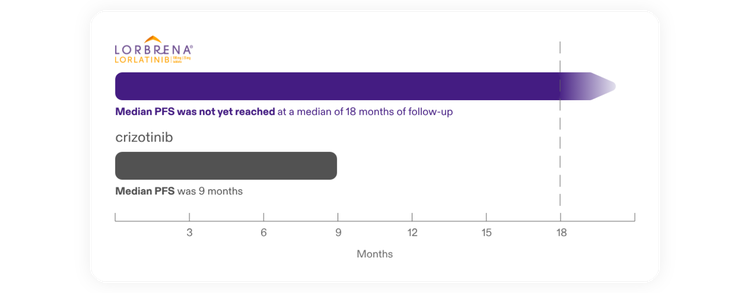

LORBRENA was approved for newly diagnosed patients based on the results of the study at 18 months. Because the median PFS had not been reached (more than half of the patients on LORBRENA had not yet experienced cancer progression), patients in the study are still being monitored, and more information is being collected.
Another goal of the study is to measure overall survival, which is the total time patients live from the start of treatment. Data are still being collected, so more time is needed to find out if patients taking LORBRENA live longer than patients taking crizotinib.
Subheader
How tumors responded to treatment
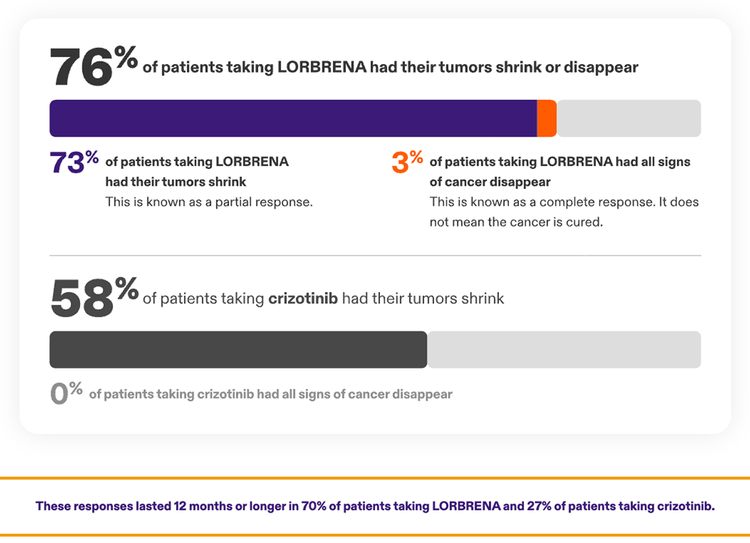
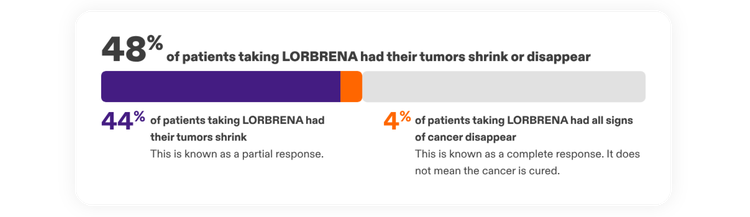
The analysis at a median of 18 months of follow-up also measured overall response rate, which is tumor response to treatment, including tumor shrinkage and disappearance throughout the body, including the brain.
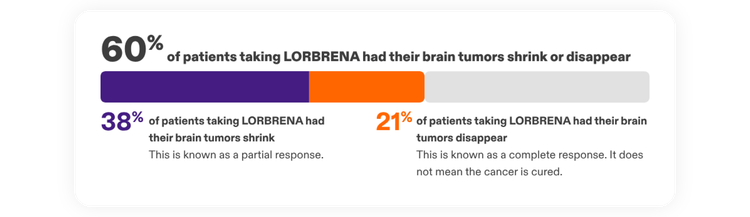
Results in patients with brain tumors
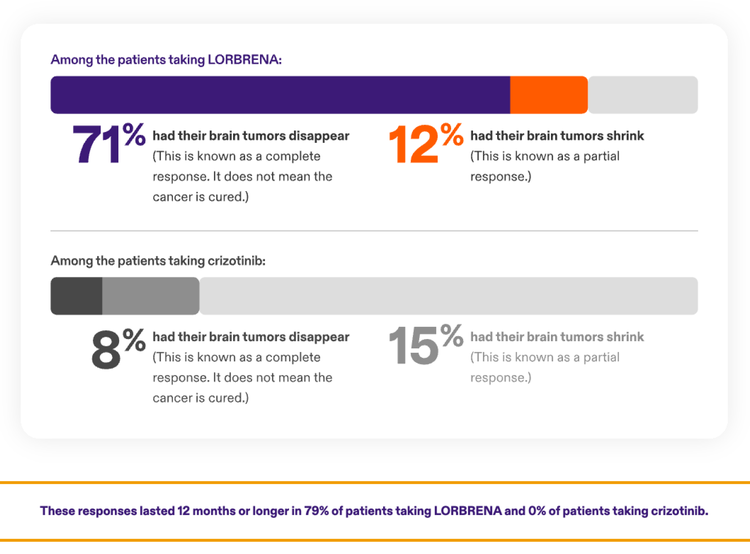
At the start of the study, 30 patients had brain tumors that could be seen and measured. Of those patients, 17 were treated with LORBRENA and 13 were treated with crizotinib.
7-year follow-up analysis
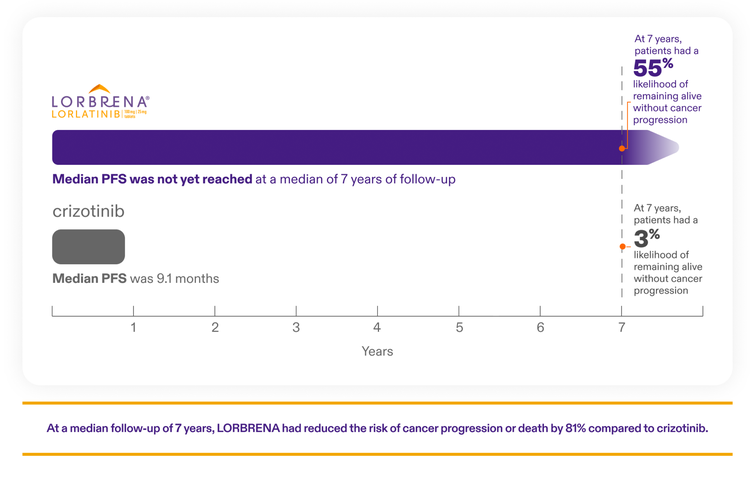
The patients in the clinical trial are still being monitored, and data are being collected and evaluated. A follow-up analysis was done at a median* of 7 years, once more data were available.
*The median is the middle value in a set of numbers.

The informal analysis was not designed to find specific differences between LORBRENA and crizotinib. Unlike the main analysis, the data did not undergo an additional independent review, and it was not used to support the FDA approval of LORBRENA. The scientists, medical professionals, and investigators assessed the informal analysis at 7 years of follow-up data. The following were observed:
Click for information on potential side effects
LORBRENA clinical trial in newly diagnosed patients
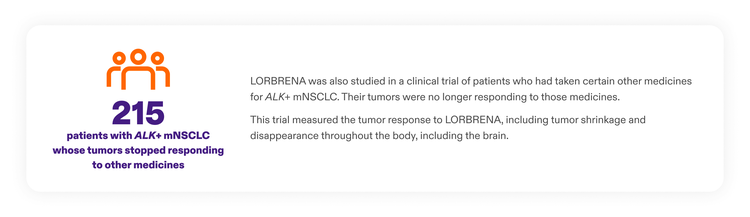
Results in all patients
Results in patients with brain tumors
*The median is the middle value in a set of numbers.
†Of the 215 patients in the trial, 148 (69%) had brain tumors at the start of treatment. Eighty-nine of the 148 patients had brain tumors that could be measured.
Considering LORBRENA?

Turn to Pfizer Oncology Together for financial assistance resources and personalized support.
Call 1-877-744-5675 (Monday-Friday 8 AM-8 PM ET)