TAKING LORBRENA

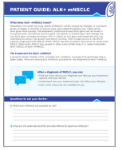
It's important to feel confident in your treatment decisions. If you are considering taking LORBRENA®, you may want to ask your doctor the following questions:

  1. How might LORBRENA help me?
  2. Has LORBRENA been shown to be effective in patients with a treatment history similar to mine?
  3. How will I know LORBRENA is working?
  4. What are the potential side effects that I may experience while taking LORBRENA?
  5. How can I best communicate with you if I experience side effects?
  6. Will I have to make any lifestyle changes if I am prescribed LORBRENA?

To help you remember what was discussed, try bringing a notepad and pen to your appointments so you can write down what you hear.

Tell your healthcare provider about the medicines you take, including prescription medicines, over-the-counter medicines, vitamins, and herbal supplements.

How to Take LORBRENA

prescription-bottle-icon

Take LORBRENA exactly as your healthcare provider tells you to take it. Do not change your dose or stop taking LORBRENA unless your healthcare provider tells you to.

pill bottle icon

Your healthcare provider may change your dose, temporarily stop, or permanently stop treatment with LORBRENA if you get side effects.

don’t break tablet icon

Swallow LORBRENA tablets whole. Do not chew, crush, or split LORBRENA tablets. Do not take LORBRENA tablets if they are broken, cracked, or not intact.

clock icon

Take LORBRENA 1 time a day, at the same time each day.

With or without food icon

You may take LORBRENA with or without food.

Dose warning icon

If you miss a dose, take it as soon as you remember. However, if it is within 4 hours of the time to take your next dose, just take your next dose at your regular time. Do not take 2 doses of LORBRENA at the same time to make up for the missed dose.

cross out icon

If you vomit after taking a dose of LORBRENA, do not take an extra dose. Take your next dose at your regular time.

Section Devider Icon

IDENTIFYING AND MANAGING POTENTIAL SIDE EFFECTS

As you begin treatment with LORBRENA, it may be helpful to learn more about potential side effects. The serious and most common ones have been outlined below. Be sure to tell your doctor if you experience these or any other side effects.

If you are experiencing side effects, there may be ways to help manage them. Please reach out to your healthcare provider for further information.

It’s important to remember that everyone responds to treatment differently, so you may or may not experience the side effects described here.

If you get serious side effects during treatment, your healthcare provider may change your dose, temporarily stop, or permanently stop treatment with LORBRENA.

The most common side effects of LORBRENA include:

  • swelling in your arms, legs, hands, and feet (edema)
  • numbness and tingling feeling in your joints or arms and legs (peripheral neuropathy)
  • weight gain
  • problems with thinking, such as forgetfulness or confusion
  • tiredness (fatigue)
  • difficulty breathing
  • pain in your joints
  • diarrhea
  • changes in mood, such as depression and irritability
  • increased cholesterol and triglyceride levels in the blood

  • cough

LORBRENA may cause decreased fertility in males, which may affect your ability to have children. Talk to your healthcare provider if you have concerns about fertility.

These are not all of the possible side effects of LORBRENA. For more information, ask your healthcare provider or pharmacist.

Call your doctor for medical advice about side effects. You may report side effects to FDA at 1-800-FDA-1088.

LORBRENA can cause serious side effects, including:

Liver problems due to interactions with other medicines. Liver problems can be severe. It is important to know what medicines not to take during treatment with LORBRENA.

Central nervous system (CNS) effects. CNS effects can be severe. Tell your healthcare provider if you get any new or worsening symptoms of CNS effects, including: problems with thinking, such as forgetfulness or confusion, changes in mood, such as depression and thoughts about suicide or dying, psychotic effects, such as seeing or hearing things that are not real (hallucinations), seizures, changes in speech, and changes in sleep.

Increases in the cholesterol and triglycerides (lipid) levels in your blood. Most people will get an increase in the lipid levels in their blood during treatment with LORBRENA.

  • If you get increases in the lipid levels in your blood, your healthcare provider may start you on a new medicine or increase your dose if you are already taking a medicine to lower the lipid levels in your blood.

  • Your healthcare provider will do blood tests to check the lipid levels in your blood before starting treatment, 1 and 2 months after starting treatment, and during treatment with LORBRENA.

Heart problems. LORBRENA can cause very slow or abnormal heartbeats. Your healthcare provider will check your heart rhythm (electrocardiogram or EKG) before starting and during treatment with LORBRENA. In some people, these problems are severe, and you may need to get a pacemaker. Tell your healthcare provider right away if you feel dizzy or faint or have abnormal heartbeats.

Lung problems. LORBRENA can cause severe or life-threatening swelling (inflammation) of the lungs during treatment that can lead to death. Symptoms may be like those from lung cancer. Tell your healthcare provider right away if you get any new or worsening symptoms of lung problems, including trouble breathing, shortness of breath, cough, or fever.

High blood pressure (hypertension). Your healthcare provider will check your blood pressure before starting treatment, 2 weeks after starting treatment, and then at least every month during treatment with LORBRENA. Your healthcare provider may start or change your blood pressure medicine if you get high blood pressure. Tell your healthcare provider right away if you get signs or symptoms of high blood pressure, including headaches, dizziness, blurred vision, chest pain or shortness of breath.

High blood sugar (hyperglycemia). LORBRENA can cause new or worsening increases in your blood sugar levels. Your healthcare provider will do blood tests to check your blood sugar levels before starting and during treatment with LORBRENA. Your healthcare provider may start or change your blood sugar medicine if you get high blood sugar. Tell your healthcare provider right away if you get any signs and symptoms of high blood sugar, including: feeling very thirsty, needing to urinate more than usual, feeling very hungry, feeling sick to your stomach, feeling weak or tired, and feeling confused.

If you get serious side effects during treatment, your healthcare provider may change your dose, temporarily stop, or permanently stop treatment with LORBRENA.

Tell your healthcare provider about all the medicines you take, including prescription medicines, over-the-counter medicines, vitamins, and herbal supplements. Taking LORBRENA with certain other medicines may increase your risk of side effects and may affect the way LORBRENA or the other medicines work. Know the medicines you take. Keep a list of them to show to your healthcare provider and pharmacist when you get a new medicine.

Do not take LORBRENA if you take certain other medicines called strong CYP3A inducers. Ask your healthcare provider for a list of these medicines if you are not sure.

Before taking LORBRENA, tell your healthcare provider about all of your medical conditions, including if you:

  • have kidney problems
  • have liver problems
  • have had episodes of depression or seizures
  • have high levels of cholesterol or triglycerides in your blood
  • have problems with your heartbeat
  • have lung or breathing problems
  • have high blood pressure
  • have diabetes or high blood sugar
  • are pregnant or plan to become pregnant. LORBRENA can harm your unborn baby

    Females who are able to become pregnant:

    • Your healthcare provider will do a pregnancy test before you start treatment with LORBRENA
    • Tell your healthcare provider right away if you become pregnant or think you may be pregnant during treatment with LORBRENA
    • Use effective non-hormonal birth control during treatment and for at least 6 months after the final dose of LORBRENA
    • Birth control pills (oral contraceptives) and other hormonal forms of birth control may not be effective if used during treatment with LORBRENA. Talk to your healthcare provider about birth control choices that are right for you during this time

    Males with female partners who are able to become pregnant:

    • Use effective birth control during treatment and for at least 3 months after the final dose of LORBRENA
  • are breastfeeding or plan to breastfeed. It is not known if LORBRENA passes into your breast milk. Do not breastfeed during treatment and for 7 days after the final dose of LORBRENA. Talk to your healthcare provider about the best way to feed your baby during this time

Recognizing Changes

LORBRENA may cause some side effects that include increased cholesterol and/or triglycerides, hallucinations, seizures, and changes in mood, memory, thinking, or speech.

If you experience side effects, know that with your doctor's guidance, there may be ways to help manage them.

It may be helpful to have an open conversation with your family or caregiver about the potential side effects of LORBRENA. They may be able to help you recognize any changes and can help you share them with your doctor.

MANAGING SIDE EFFECTS

If you think you may be experiencing side effects while taking LORBRENA, it's important to tell your doctor right away. He or she may adjust your LORBRENA dose or suggest additional medicine to take while you are taking LORBRENA. Do not change your dose or stop taking LORBRENA unless your doctor tells you to.

high cholesterol icon

If you develop  high cholesterol and/or triglycerides, also called "lipids," while taking LORBRENA, your doctor may need to start you on lipid-lowering medicines (usually a certain statin). If you are already taking lipid-lowering medicines, your doctor may increase the dose of the lipid-lowering medicine or prescribe a different medicine.

brain icon

If you experience problems with thinking (such as forgetfulness or confusion), mood (such as depression), or speech, your doctor may adjust your LORBRENA dose or, in some cases, may have you stop taking LORBRENA. In the clinical study, these side effects were generally reversible by adjusting or withholding your dose of LORBRENA.

scale icon

Dietary advice from a nutritionist and routine exercise may be effective weight management strategies. Speak with your doctor if you are experiencing weight gain.

Dose warning icon

Be sure to let your doctor know if you experience swelling in your arms, legs, hands, and feet (edema) while taking LORBRENA. Your doctor may adjust your dose of LORBRENA or prescribe a diuretic, which decreases the amount of water in your body through urination. If you experience edema, you can also ask your doctor about: leg elevation, compression stockings, and lifestyle changes (such as exercising and limiting salt intake).

arm icon

If you experience feelings of numbness or tingling in the joints or arms and legs (peripheral neuropathy), your healthcare provider may start you on a medicine to treat it or change the dose of LORBRENA.

HEALTH TIPS

If you have ALK+ NSCLC, consider adopting healthy habits. Remember to always work with your doctor when making health and diet changes.

Simple Changes to Consider:

Maintain a balanced diet—What you eat may affect how you feel. If you're interested in eating healthier, talk to your doctor or a nutritionist.

Stay active—Light exercise and walking are activities you could ask your doctor about.

Join a support group—You're not alone. Explore support groups in your area or online.

Rest—When you feel fatigued, listen to your body. Take a few moments to lie down or take a nap.

Keep track of your questions and how you feel—Write them down in a journal or notepad and take it with you to appointments to discuss with your healthcare provider.

Section Devider Icon

FOR CAREGIVERS

As a caregiver or member of a support team, it's natural for you to want to be there for your loved one who has ALK+ NSCLC. Sometimes, you may even end up putting your own needs on hold. As you care for your loved one, it's important to remember that before you can take care of someone else, you must also care for yourself.

Caregivers and Patients Are in It Together

Whether you've become a caregiver gradually or suddenly, simple strategies and tools can help you and your loved one navigate the path ahead as a team. Here are some ways to be there for your loved one:

Household care icon

Household care: Prepare meals, offer to do laundry, or run errands (like grocery shopping).

Healthcare icon

Health care: Pick up prescriptions, help schedule doctor visits, and take notes at visits.

Emotional care icon

Emotional care: Listen, provide companionship, share stories, or enjoy a fun activity together, like watching a movie or going for a walk.

Find resources to help patients and caregivers on the Materials page.

Become Your Loved One's Eyes and Ears

pencil icon

Are you accompanying your loved one to appointments? If so, it might be helpful to take notes, ask questions, and meet the doctor and healthcare team. The Patient Discussion Guide can help you prepare for conversations with your loved one's healthcare providers.

folder icon

Throughout treatment, your loved one will receive a lot of information. Consider keeping a folder or binder to help you and your loved one keep track of medications, insurance information, appointments, test results, and questions to ask the doctor.

stethoscope icon

If you notice your loved one is acting differently, let the doctor know. You may want to encourage your loved one to use the Patient Journal to record and reflect on their experience.

Important Safety Information and Indication

View More

Important Safety Information

LORBRENA can cause serious side effects, including:

  • Liver problems due to interactions with other medicines. Liver problems can be severe. It is important to know what medicines not to take during treatment with LORBRENA.
  • Central nervous system (CNS) effects. CNS effects can be severe. Tell your healthcare provider if you get any new or worsening symptoms of CNS effects, including: problems with thinking, such as forgetfulness or confusion, changes in mood, such as depression and thoughts about suicide or dying, psychotic effects, such as seeing or hearing things that are not real (hallucinations), seizures, changes in speech, and changes in sleep.
  • Increases in the cholesterol and triglycerides (lipid) levels in your blood. Most people will get an increase in the lipid levels in their blood during treatment with LORBRENA.
    • If you get increases in the lipid levels in your blood, your healthcare provider may start you on a new medicine or increase your dose if you are already taking a medicine to lower the lipid levels in your blood.
    • Your healthcare provider will do blood tests to check the lipid levels in your blood before starting treatment, 1 and 2 months after starting treatment, and during treatment with LORBRENA.
  • Heart problems. LORBRENA can cause very slow or abnormal heartbeats. Your healthcare provider will check your heart rhythm (electrocardiogram or EKG) before starting and during treatment with LORBRENA. In some people, these problems are severe, and you may need to get a pacemaker. Tell your healthcare provider right away if you feel dizzy or faint or have abnormal heartbeats.
  • Lung problems. LORBRENA can cause severe or life-threatening swelling (inflammation) of the lungs during treatment that can lead to death. Symptoms may be like those from lung cancer. Tell your healthcare provider right away if you get any new or worsening symptoms of lung problems, including trouble breathing, shortness of breath, cough, or fever.
  • High blood pressure (hypertension). Your healthcare provider will check your blood pressure before starting treatment, 2 weeks after starting treatment, and then at least every month during treatment with LORBRENA. Your healthcare provider may start or change your blood pressure medicine if you get high blood pressure. Tell your healthcare provider right away if you get signs or symptoms of high blood pressure, including headaches, dizziness, blurred vision, chest pain, or shortness of breath.
  • High blood sugar (hyperglycemia). LORBRENA can cause new or worsening increases in your blood sugar levels. Your healthcare provider will do blood tests to check your blood sugar levels before starting and during treatment with LORBRENA. Your healthcare provider may start or change your blood sugar medicine if you get high blood sugar. Tell your healthcare provider right away if you get any signs and symptoms of high blood sugar, including: feeling very thirsty, needing to urinate more than usual, feeling very hungry, feeling sick to your stomach, feeling weak or tired, and feeling confused.

If you get serious side effects during treatment, your healthcare provider may change your dose, temporarily stop, or permanently stop treatment with LORBRENA.

Before taking LORBRENA, tell your healthcare provider about all of your medical conditions, including if you:

  • have kidney problems
  • have liver problems
  • have had episodes of depression or seizures
  • have high levels of cholesterol or triglycerides in your blood
  • have problems with your heartbeat
  • have lung or breathing problems
  • have high blood pressure
  • have diabetes or high blood sugar
  • are pregnant or plan to become pregnant. LORBRENA can harm your unborn baby.

    Females who are able to become pregnant:

    • Your healthcare provider will do a pregnancy test before you start treatment with LORBRENA.
    • Tell your healthcare provider right away if you become pregnant or think you may be pregnant during treatment with LORBRENA.
    • Use effective non-hormonal birth control during treatment and for at least 6 months after the final dose of LORBRENA.
    • Birth control pills (oral contraceptives) and other hormonal forms of birth control may not be effective if used during treatment with LORBRENA. Talk to your healthcare provider about birth control choices that are right for you during this time.
    • Males with female partners who are able to become pregnant:

    • Use effective birth control during treatment and for at least 3 months after the final dose of LORBRENA.
  • are breastfeeding or plan to breastfeed. It is not known if LORBRENA passes into your breast milk. Do not breastfeed during treatment and for 7 days after the final dose of LORBRENA. Talk to your healthcare provider about the best way to feed your baby during this time.

Tell your healthcare provider about all the medicines you take, including prescription medicines, over-the-counter medicines, vitamins, and herbal supplements. Taking LORBRENA with certain other medicines may increase your risk of side effects and may affect the way LORBRENA or the other medicines work.

Know the medicines you take. Keep a list of them to show to your healthcare provider and pharmacist when you get a new medicine.

Do not take LORBRENA if you take certain other medicines called strong CYP3A inducers. Ask your healthcare provider for a list of these medicines if you are not sure.

The most common side effects of LORBRENA include:

  • swelling in your arms, legs, hands, and feet (edema)
  • numbness and tingling feeling in your joints or arms and legs (peripheral neuropathy)
  • weight gain
  • problems with thinking, such as forgetfulness or confusion
  • tiredness (fatigue)
  • difficulty breathing
  • pain in your joints
  • diarrhea
  • changes in mood, such as depression and irritability
  • increased cholesterol and triglyceride levels in the blood
  • cough

LORBRENA may cause decreased fertility in males, which may affect your ability to have children. Talk to your healthcare provider if you have concerns about fertility.

These are not all of the possible side effects of LORBRENA.

Call your doctor for medical advice about side effects. You may report side effects to the FDA at 1-800-FDA-1088.

INDICATION

LORBRENA is a prescription medicine that is used to treat adults with non-small cell lung cancer (NSCLC) that is caused by an abnormal anaplastic lymphoma kinase (ALK) gene, and that has spread to other parts of your body (metastatic).

Your healthcare provider will perform a test to make sure that LORBRENA is right for you.

It is not known if LORBRENA is safe and effective in children.

Turn to Pfizer Oncology Together™ to learn about financial assistance resources and get personalized support from one of our dedicated Care Champions.

© 2026 Pfizer Inc. All rights reserved.

Patients should always ask their doctors for medical advice about adverse events.

You are encouraged to report an adverse event related to Pfizer products by calling 1-800-438-1985
(US only). If you prefer, you may contact the US Food and Drug Administration (FDA) directly.

The product information provided in this site is intended for residents of the United States. The products discussed herein may have different product labeling in different countries.

The health information contained herein is provided for educational purposes only and is not intended to replace discussions with a healthcare provider. All decisions regarding patient care must be made with a healthcare provider, considering the unique characteristics of the patient.

Pfizer, PO Box 29387, Mission, KS 66201.
Last Updated: March 2026 PP-LOR-USA-1116

LORBRENA® is a registered trademark of Pfizer Inc.